
Foam rolling is a recovery technique that can help with reducing tight aching muscles and it can help to prevent injury. You do not need to have an injury in order to start foam rolling – it works really well alongside stretching as part of a self-care routine for your body. You can foam roll most muscles easily such as quads, hamstrings, calves, glutes and lats to name a few.
Foam rolling works by a compression technique that encourages the muscle fibers to return to their original state after they may have become restricted following injury, trauma, inactivity or poor previous recovery. It applies pressure to the targeted muscle, like how a massage would feel, to help release tension in the muscle and improve blood supply so that your muscle can recover well.
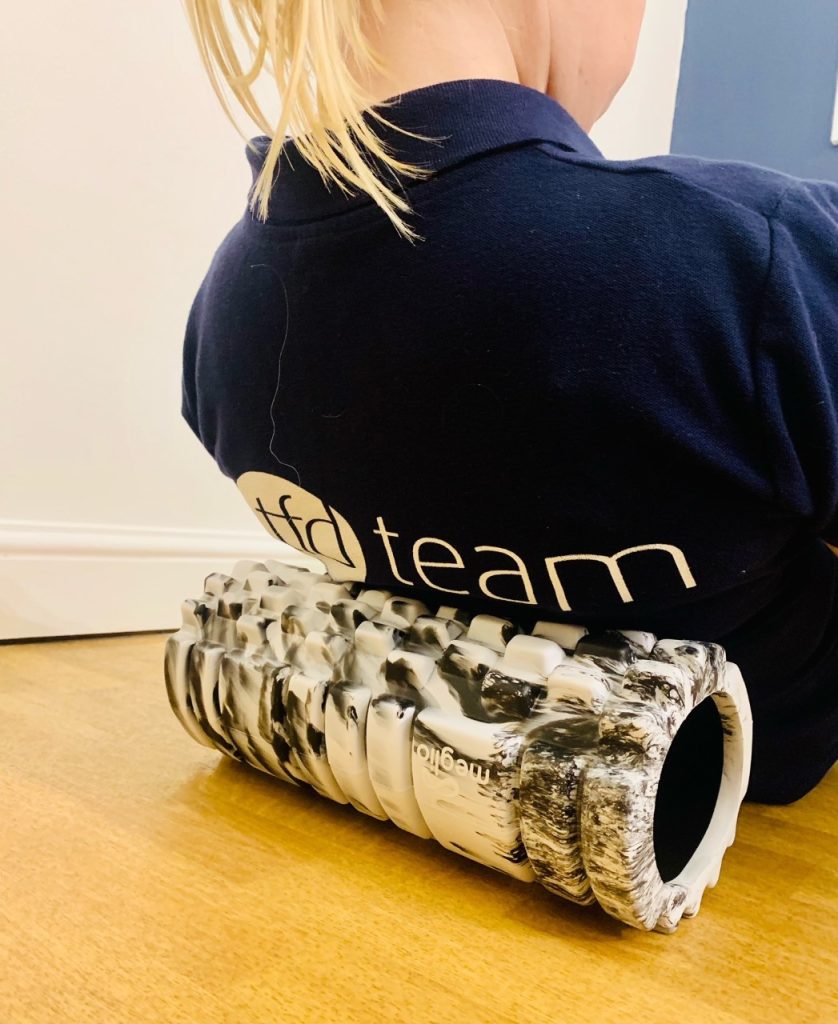
Contrary to popular belief, foam rolling shouldn’t be painful! If there is too much pressure and it is painful then your muscles will tense up, and it will have the opposite effect to what you are aiming to achieve. Ideally, foam rolling may be slightly uncomfortable, but it should never be painful.
Start with light pressure on your targeted muscle and gradually increase, staying where you can easily tolerate it (as a rough guide aiming for no more than 7/10 on your pain scale – note everyone will be slightly different here). You can use other body parts to adjust how much of your weight is on the foam roller and ease off if it starts to feel too much. Work your way through the entire muscle slowly and if you find a specific area that is slightly more tender than the rest of it, then gently rock back & forth over this area until that discomfort subsides. Foam rolling for around 10-15 minutes is generally considered to be ideal.
Incorporating it into your regular routine will help to keep your muscles in a supple condition, meaning you are less likely to become injured. Muscles that have been foam rolled will have increased blood flow and circulation, less restriction, increased mobility and flexibility, as well as limiting soreness to promote recovery after a workout which in turn will decrease your chances of injury.
For any foam rolling advice or to find out how it could benefit you and your recovery, speak to one of the team!