
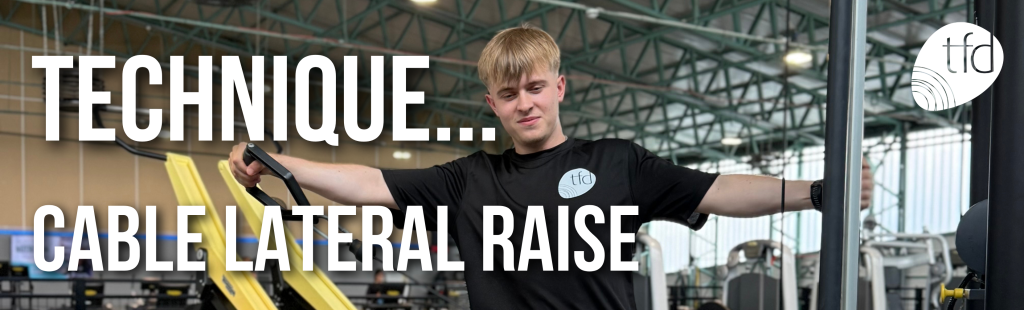
When it comes to building wider, rounder shoulders, few exercises are as effective as the cable lateral raise. While dumbbell lateral raises are popular, cables provide constant tension throughout the movement, making them an excellent tool for targeting the lateral (side) deltoids and creating that favoured shoulder width and tone.
Why choose cable lateral raises?
Unlike dumbbells, where resistance decreases at certain points of the lift, cables maintain tension on the muscles from start to finish. This increased time under tension can help improve muscle activation, control, and overall shoulder development.
Benefits of using a cable:
- Constant tension on the side deltoids
- Improved muscle isolation
- reduced momentum compared to dumbbells
- Better mind-muscle connection
- Effective for hypertrophy (muscle growth)
How to set up lateral raises on a cable machine:
Step 1: Set up
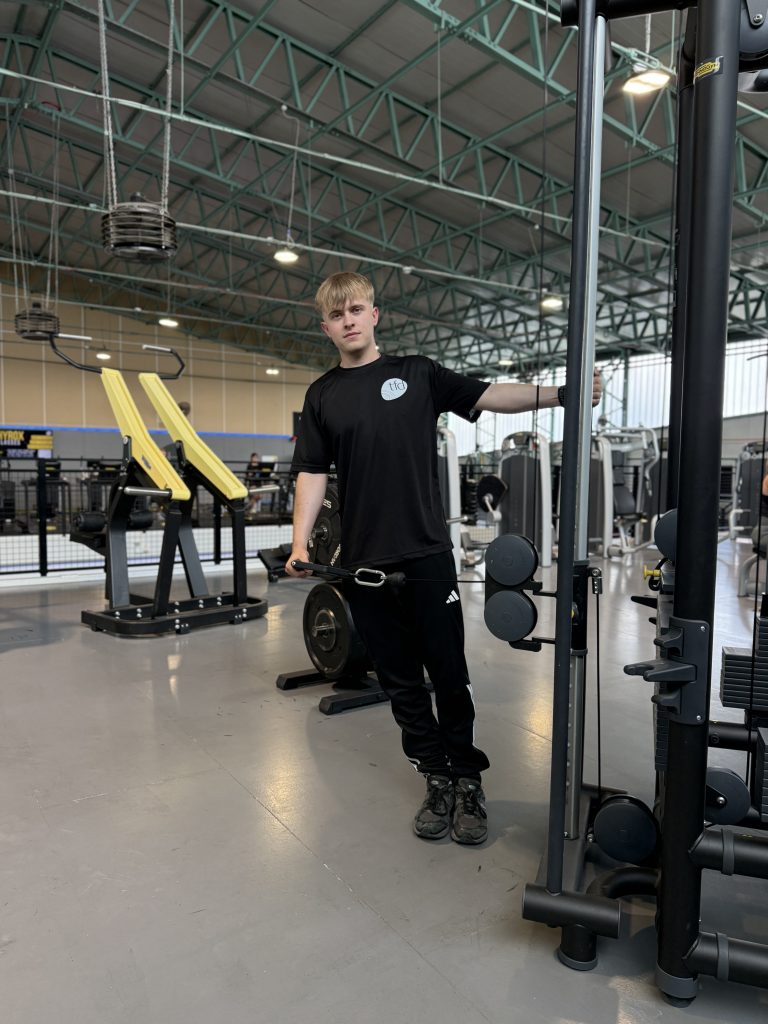
Position the cable pulley so that the handle starts at approximately hip height. Stand side-on to the machine and grasp the handle with the hand furthest from the cable stack.
Step 2: Movement
- Stand tall with your chest up, a very forward tilt to maximise effort on the lateral head.
- Keep a slight bend in your elbow.
- Take a step into the machine and grab the support bar.
- Engage your core for stability/ lean into/ away from the machine, depending on the best angle of movement for you.
- Allow your arm to start alongside your body with the cable aligned around hip height.
Step 3: Repetitions
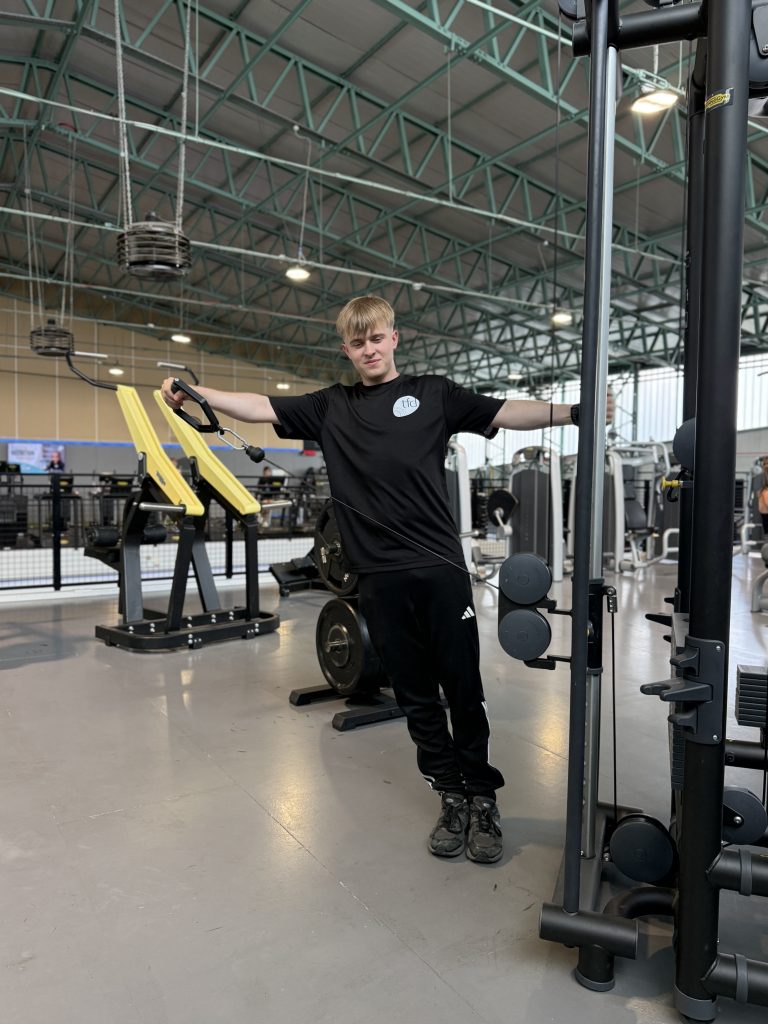
Lift the handle out to the side in a controlled arc until your arm reaches approximately shoulder heigh.
Focus on leading with your elbow rather than your hand. Think about moving the elbow away from your body rather than simply lifting the handle.
Step 4: Controlling the eccentric portion of the movement
Slowly lower the handle back to the starting position while maintaining tension on the shoulder. Avoid allowing the weight stack to slam down between repetitions.
Mistakes most gym goers make:
Using too much weight
Heavy weights often lead to swinging, shrugging, and reduced shoulder activation. Select a weight that allows complete control throughout the movement.
Shrugging the shoulders
Many lifters unintentionally involve the upper traps. Keep your shoulders down, think about activating your lat to keep scapula down and focus on lifting through the side deltoid, in a sweep away fashion.
Raising above shoulder height
Going excessively high can place unnecessary stress on the shouder joint and shift tension away from the target muscle.
Turning it into a front raise
Keep the movement in the scapular plane (slightly in front of the body) rather than directly forward.
Recommended sets and reps
For muscle growth and shoulder development, higher rep ranges usually work better:
- Beginners: 2-3 sets of 12-15 reps
- Intermediate: 3-4 sets of 10-15 reps
- Advanced: 3-5 sets of 12-20 reps
Focus on quality contractions and controlled tempo rather than chasing heavier weights, the shoulder joint is very complex and has a lot of moving parts, if going too heavy with improper form, likelihood of injury or discomfort can increase.
Final thoughts
The cable lateral raise is one of the most effective exercises for developing wider shoulders and improving deltoid definition. By using proper technique, controlled movement, and consistent tension, you’ll maximise shoulder growth while minimising unnecessary stress on the joints.
Remember: with shoulders, the goal isn’t to move the most weight – it’s to make then do the most work, whilst recruiting the least support from other muscles.
Blog by Sam North – Personal Trainer (SNPT)