
In the longest running study of its kind looking at factors that enable people to flourish and thrive in their lives, the Harvard Adult Development Study is now on its second and third phases as it continues to follow the lives of the descendants from its original study which began 88 years ago in 1938. Its findings were, that the biggest determining factor of how long and how happily you will live is relationship satisfaction. The participants who lived longer and were more content with their lives were the ones who had close relationships with friends or family rather than those who had money or fame.
Similarly, across the globe, there are 9 “Blue Zones” where the inhabitants live comparably longer than the global average; one of the common factors across these regions is also social connection. One of these areas is in Japan, where they have a concept known as Ikigai which translates as “a reason for being.” Put in super simple terms – it’s our reasons for getting up and on with our lives every day.
How are these things relevant to me you might be asking and how can they help me achieve wellbeing?
Wellbeing is one of the most ubiquitous words around at the moment. In just about every newspaper, magazine or TV article or advert, product packaging and social media post there is advice about how to achieve an ultimate sense of wellbeing. As defined by the NHS, wellbeing is more than just the absence of ill health, it embodies an individual’s subjective view of themselves and their lives.
In a world where technology enables us to be more widely connected than ever before, we can often feel an increasing sense of disconnection. Following the lives of friends, family and others who interest us on social media along with the ability to message on multiple platforms can make us feel like we’re winning and keeping all the plates spinning, however on the flip side, it can also lead to overwhelm whilst diluting the quality of our interactions. These digital interactions cannot replace real-time, real-world human connection.
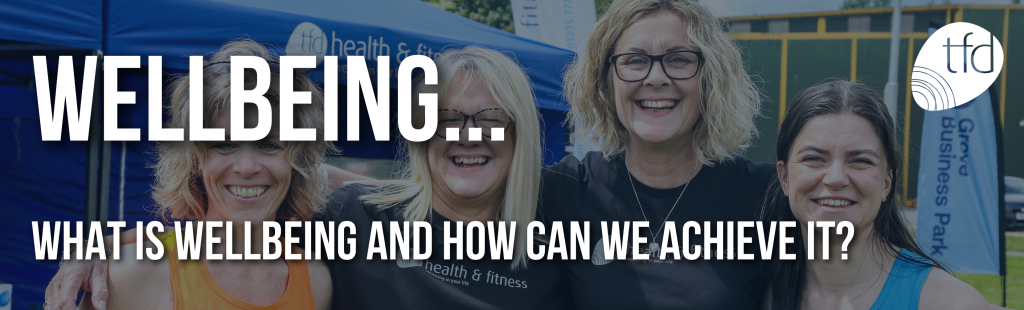
A sense of belonging and feeling connected is just one element of the philosophy tfd aim to provide for our members; how this looks will be different for everyone.

Consider our motif – the TFD rippled pebble; TFD stands for The First Drop. Take just a moment now to visualise dropping a pebble into a pool of water; notice the ripples that radiate out from it. That first drop of the pebble is you taking the plunge to do something new or challenging or to re-visit something (an activity or hobby) that has fallen by the wayside over time.
Social connection can have that ripple effect sending positive changes into other areas of our lives. When we meet others who have a shared interest, we can experience many positive physiological and psychological changes. Our stress levels decrease, blood pressure and inflammation can reduce which leads to a reduction in our risk of serious health problems. We feel lighter in mood and happier in ourselves and often then make better choices around food, movement and exercise which continue to strengthen positive physiological changes.
So, what can you do about it? Here's some suggestions to get you started:
- Been thinking about trying a new class/workshop and been putting it off? Book on today!
- Not heard from a friend in a while? Get in touch and ask them to join you at the gym, you could walk together in between sessions or meet up for a cuppa too.
- Book a challenge with a friend and speak to our gym team about a workout programme that will get you ready to go!
- Read the same book or listen to the same music as a friend and meet up to chat about it – we’ve a great selection on our book swap shelves in our cafe area.
- Re-visit an old hobby or activity that may have slipped through the net – there may be a club or organisation around that you could join to meet like-minded people.
- As well as making time for doing things you enjoy with people who make you smile, simple repeatable daily habits such as eating regular whole food meals, getting 8 hours sleep a night, spending time outside, drinking plenty of water and moving regularly will help to nourish your body, keep your energy levels up and help you maintain a positive outlook.
Blog by Elaine Butler – Personal Trainer & Level 4 Nutritional Advisor