
Foam rolling is a recovery technique that uses rolling action with a specific roller to create a massage-like effect and apply pressure to certain areas of soft tissue. It is a tool to help relieve pain and encourage your muscles to relax. It is a form of self-myofascial release. Foam rolling helps to limit soreness, increase circulation, improve mobility, and flexibility. It can help to promote recovery after a workout and prevent injury.
Ideally muscle fibers will slide past each other with ease as you move, however sometimes they can get a little bit stuck. The fascia covering the fibers can become stuck for several reasons including injury, trauma, inflammation, poor recover, or inactivity. This essentially means the tissue becomes bound to each other and can cause what we know as ‘knots’ or ‘trigger points’ that feel tight and can result in you feeling pain either in that spot, or sometimes elsewhere. Foam rolling in these areas will help to get the fibers back to their original state by applying pressure and moving the fascia to separate and relax them, which will make them more flexible again.
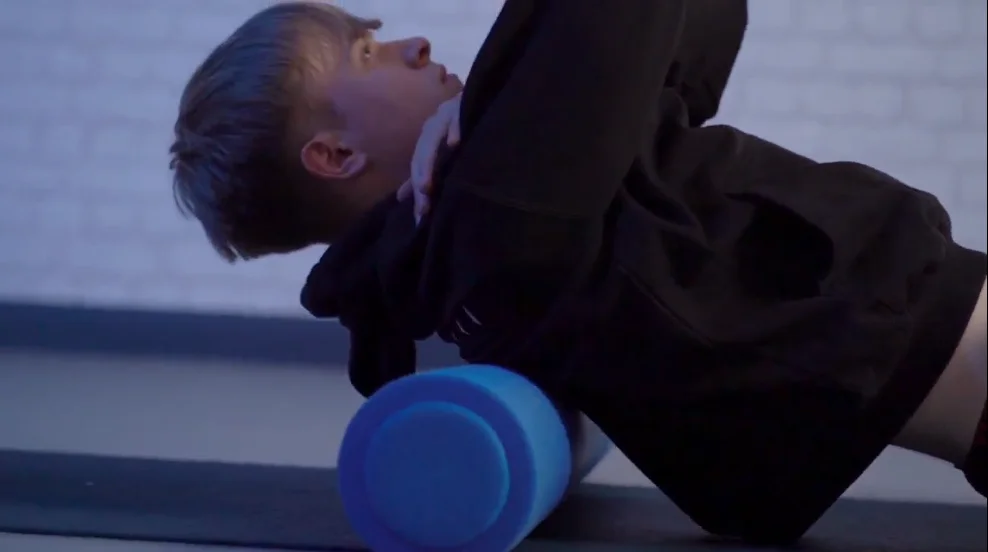
You can foam roll any muscles such as glutes, hamstrings, quads, calves, and lats. You should avoid foam rolling over joints, bones, and ligaments. For an active person, foam rolling every day for around 10-15 minutes is considered ideal. Incorporating it into your regular routine will help to keep your muscles in a supple condition, meaning you are less likely to become injured.
The art of foam rolling can be a little tricky and can feel a bit of a workout as you are supporting your bodyweight throughout. Lay on the ground with the foam roller between the floor and the targeted muscle/tissue. Shift your bodyweight to begin rolling the foam roller up and down the area – note for larger muscles you may need to move the roller medially and laterally (inside and outside) to make sure you cover the whole muscle. You are essentially using the first step of rolling to explore and look for any tight spots or trigger points/knots. If you find any of these (they will be localised spots that are tender when you roll over it) then roll gently back and forth on this spot for longer until you feel the tension fade and pain decrease.
Foam rolling shouldn’t feel excruciatingly painful as your muscles need to be able to stay relaxed during it. You shouldn’t go about a 7 or 8 out of 10 on your pain scale (note this will be different for everyone). You can adjust the pressure you use by changing your body position or using your arms and legs on the floor for varied support, meaning more or less of your bodyweight is on the roller itself. There are also different types of rollers that can vary the intensity, for example a foam one will be a little softer compared to the harder and textured ones that will get into the muscles a bit more!
For any foam rolling advice or to find out how it might benefit you and your recovery speak to one of the team.
Blog by Jo Davies – Level 5 Soft Tissue Therapist