
Iliotibial Band Syndrome (ITBS) is one of the most common overuse injuries seen in runners, cyclists, and active individuals. While it often presents as a sharp or burning pain on the outside of the knee, the root cause is usually more complex than the knee itself. With the right assessment and treatment plan, ITBS is highly manageable — and most people can return to pain-free movement.
The iliotibial band (IT band) is a thick band of connective tissue that runs down the outside of the thigh, from the hip to just below the knee. Its role is to help stabilise the hip and knee during movement, particularly during walking, running, and cycling. Problems can arise when this band becomes overloaded or excessively tight, leading to irritation where it passes over the outer knee.
ITB Syndrome occurs when the iliotibial band repeatedly rubs or compresses tissues near the outer knee, causing pain and inflammation. This is typically the result of repetitive movement combined with poor load management or biomechanical issues, rather than a single injury.
Common ITB Syndrome Symptoms:
- Pain on the outside of the knee, especially during activity
- Discomfort that worsens with running downhill or on cambered surfaces
- Pain that starts during exercise and eases with rest (at first)
- Tenderness when pressing on the outside of the knee
- Tightness along the outer thigh or hip
If left untreated, symptoms can become more persistent and begin to affect everyday activities.
Common ITB Syndrome Causes Include:
- Sudden increases in training volume or intensity
- Poor hip or gluteal strength
- Reduced control of the hip and knee during movement.
- Limited ankle or hip mobility
- Running or cycling technique issues
- Inadequate recovery between sessions
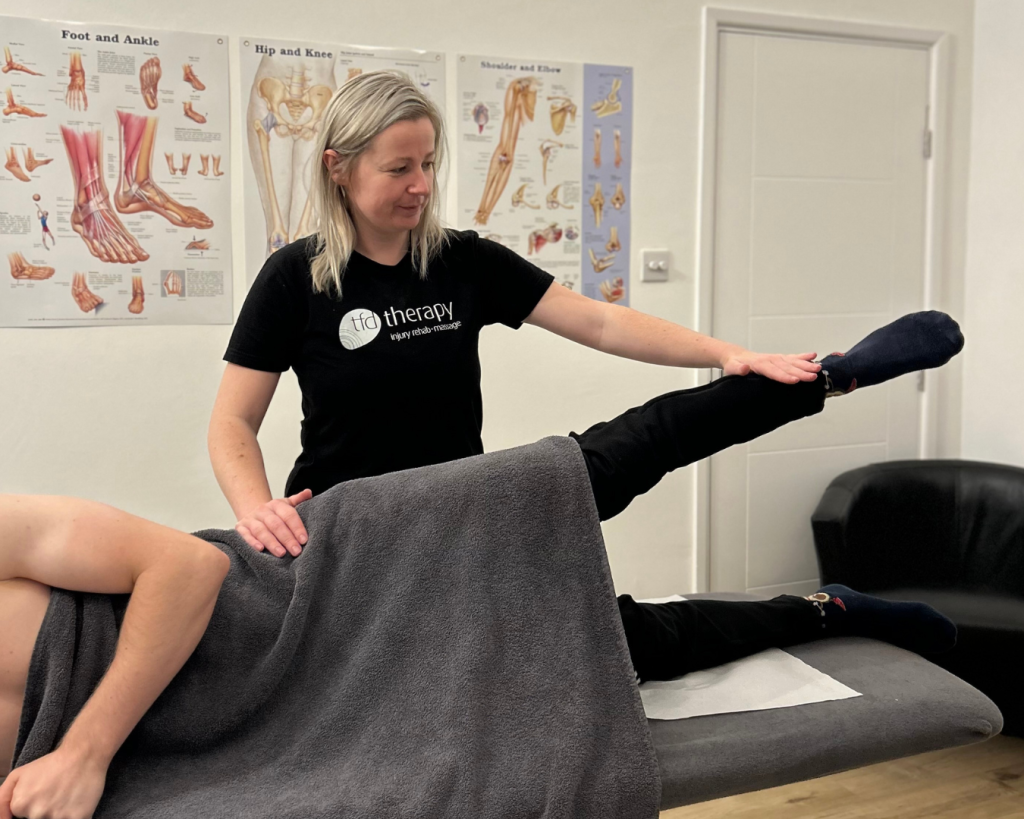
Assessment is key to figure out the root cause of the issue and not just treating the symptoms. Hands-on therapy to help reduce irritation, alongside targeted strengthening particularly of the glutes and hip will help with mechanics during exercise. While stretching and foam rolling can help relieve surrounding muscle tension, the IT band itself is very strong and doesn’t “stretch” easily. These tools are best used as supporting strategies that address the issue. With the right assessment and treatment alongside recovery, ITB Syndrome is very treatable with most people making a full recovery and returning to doing what they love.
Blog by Jo Davies – Level 5 Soft Tissue Therapist