
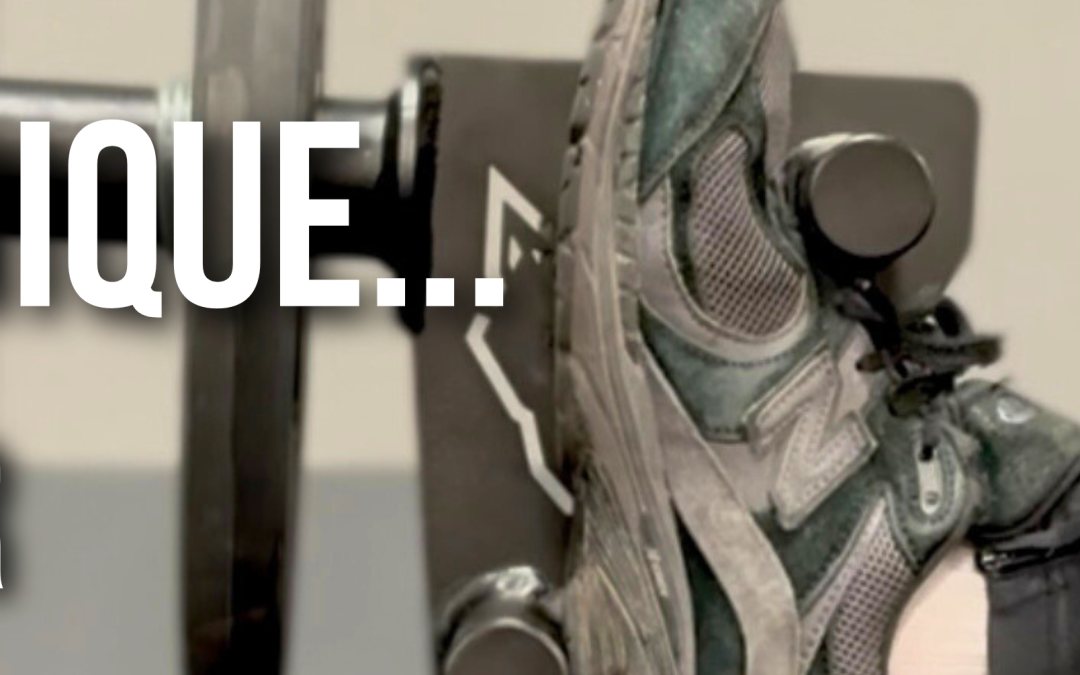
When it comes to training legs, strengthening the ankle and support against shin splints, most people focus on calves and forget the muscle on the front of the shin—the tibialis anterior. Yet this often-overlooked muscle plays an important role in ankle health, performance, and injury prevention, especially against issues that affect so many like shin splints. In recent years, tools like the tib bar have made strengthening the tibialis anterior more accessible and effective than ever.
What is the tibialis anterior?
The tibialis anterior runs along the front of the lower leg, starting just below the knee and attaching to the foot near the big toe. Its primary functions include:
- Dorsiflexion – lifting the foot upward toward the shin.
- Controlling foot strike during walking and running.
- Stabilising the ankle and arch of the foot.
Every time your heel hits the ground, the tibialis anterior works eccentrically to slow the foot down. Despite this constant use, it’s rarely trained directly in traditional strength programs, causing it to lag, eventually leading to certain dysfunctional issues.
What is the tib bar?
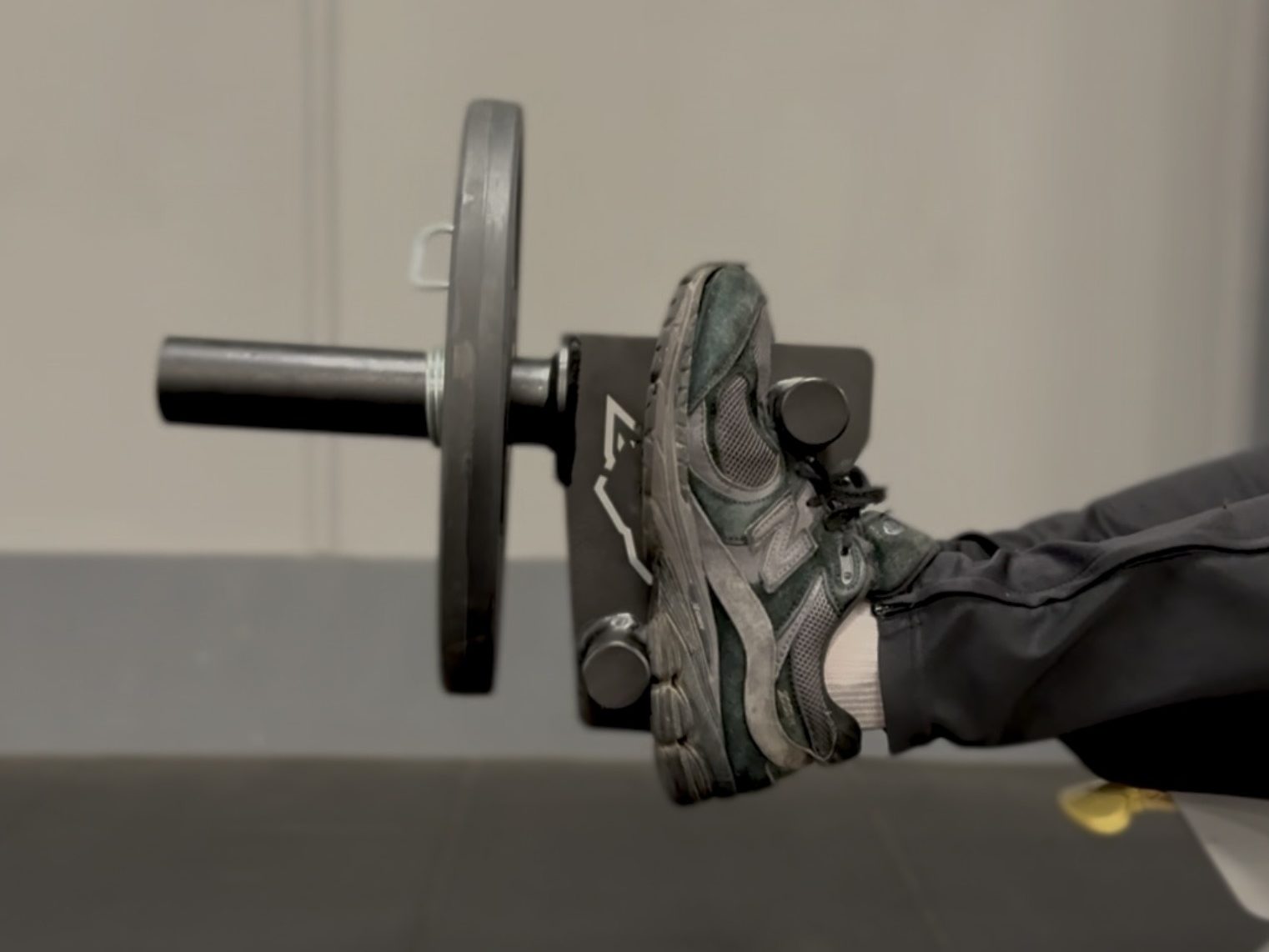
A tib bar is a specialized training tool designed to load ankle dorsiflexion in a controlled and progressive way. It typically consists of:
- A bar that hooks over the forefoot.
- A loading sleeve for weight plates.
- A strap or brace to secure the foot.
Unlike resistance bands or bodyweight movements, a tib bar allows for true progressive overload, making it a great option for long-term strength development.
Common tib bar exercises include:
- Seated tibialis raises.
- Single leg tib raises.
- Tempo-controlled eccentric reps.
Benefits of adding a tib bar to your training:
Reduced risk of shin splints:
Shin splints often begin when the tibialis anterior us too weak or overworked to support the area. Strengthening the tibialis anterior improves load tolerance and helps absorb impact forces during running and jumping.
Improved ankle and knee function:
Stronger dorsiflexors improve ankle stability and control, which can positively influence knee mechanics—especially during squats, lunges, and landing tasks.
Better running dynamics:
Efficient foot clearance and controlled foot strike translate to:
- Improved running economy.
- Faster ground contact times.
- More elastic and reactive lower legs.
Further injury prevention:
Balanced lower-leg strength (front and back of the shin) helps protect against:
- Ankle sprains.
- Tendon irritation.
- Overuse injuries.
This is especially valuable for athletes in sports involving sprinting, cutting, or repeated jumping.
Enhanced mobility with other aspects of training:
Direct tibialis anterior training improves active ankle dorsiflexion, which supports deeper squats, better landing mechanics, and overall movement quality.
Why the tib bar is a better option than alternative methods
While bands and bodyweight exercises can be beneficial, they often aren’t as effective at providing consistent resistance throughout the movement. The tib bar stands out because it:
- Allows heavier loading using plate weights.
- Easy to progress from rehab to high performance.
- Encourages strict, isolated movement patterns, including eccentric control.
- Fits into general strength programmes.
Best way to programme the tib bar to benefit you:
For most people, 1-2 sessions a week is ideal, following a higher rep range. A simple starting point:
- 2-3 sets.
- 12-20 controlled reps.
- Slow eccentric (lowering) phase.
Tibialis exercises can work well in supersets with calf raises, sled pushes, and step-ups.
Benefits to HYROX training:
Training tibialis anterior is hugely beneficial for anyone looking to compete in HYROX for many reasons:
- Improved ankle mobiliy makes acheiving wall ball depth much easier as well as improved upward power on wall balls.
- Less likely to develop injuries, especially running related injuries such as shin splints.
- Improved burpee broad jumps due to more power to travel further on jumps, lower depth on squat position and more control through the landing.
- A stronger base for sled push and pull, including more drive on push through the lower limbs.
- The improved ankle stability and balance that comes from training the tibialis anterior is hugely beneficial throughout hyrox as it reduces the risk of injury when your body is tired after the 8km and 8 stations.
Blog by Sam North – Personal Trainer (SNPT)