
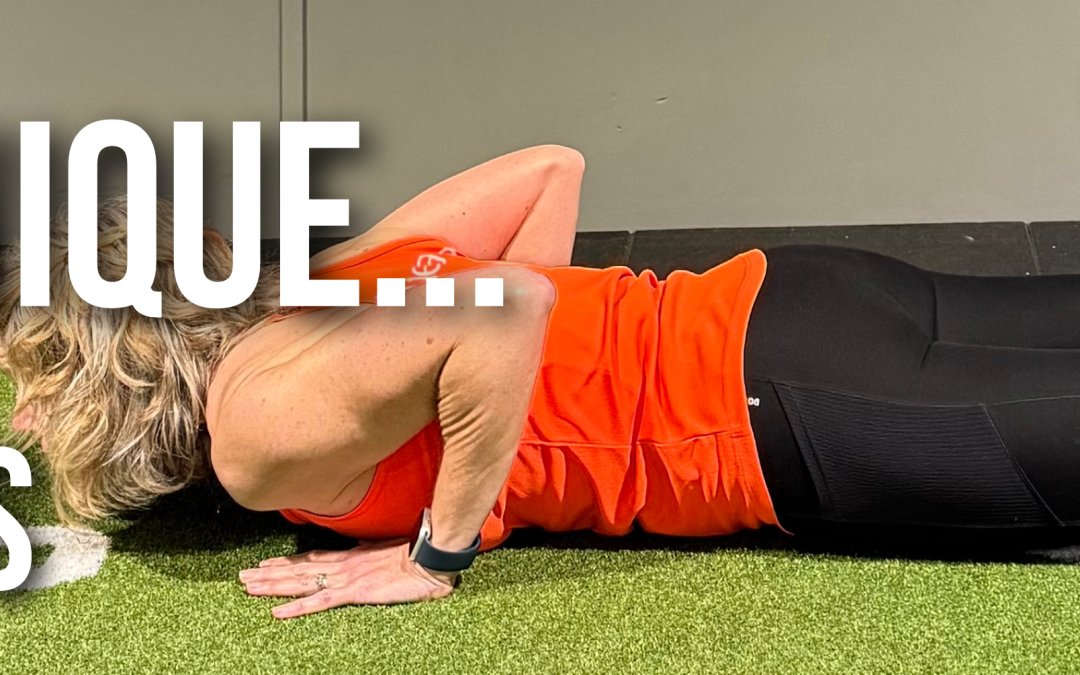
Targeting various muscle groups including chest, shoulders, triceps, abdominals, quads, glutes and hamstrings, burpees are a challenging dynamic full body exercise comprising many functional movements.
If you’re looking for a time-saving full-body exercise this is the one for you – they can provide multiple benefits for the body including cardiovascular fitness, muscle and joint strength, power, endurance, co-ordination, mobility, balance and flexibility.
The quick-fire nature of moving through the various stages of a burpee increases your heart rate, strengthening the heart and helping to improve your cardiovascular endurance. As a HIIT exercise, they are an efficient way of increasing your calorie burn.
Burpees can be easily adapted to vary the level of challenge and to change how the body benefits. With many different bodyweight variations and versions using equipment, there’s bound to be a burpee variation that will work for you.
Put simply, a burpee is a squat to a plank to a press up to a squat to a vertical jump – aim for fluidity of the move as you become more proficient.
Knowing what not to do can help nail that technique right from the start so take a look at some of these common mistakes before you start:
- Back rounding in squat position. FIX IT – think about a broom handle along your spine, keep your chest lifted and eyes looking forwards.
- Hips dropping in plank position putting too much strain on the lower back. FIX IT– push back into your heels and engage the muscles in your posterior chain, pull your core to your spine.
- Not placing your palms on the floor – only using fingertips can put too much pressure through your fingers. FIX IT – this can be due to poor hip mobility, so try bending your knees more.
- Using arms to push the floor away rather than using your core to snap your hips back up in the push up stage of the exercise.
Here’s some key points to follow for a chest to floor burpee:
Step 1: Begin in a standing position with core engaged and hips stacked over ribs. Legs should be straight i.e. hips and knees extended not bent, feet shoulder width apart.
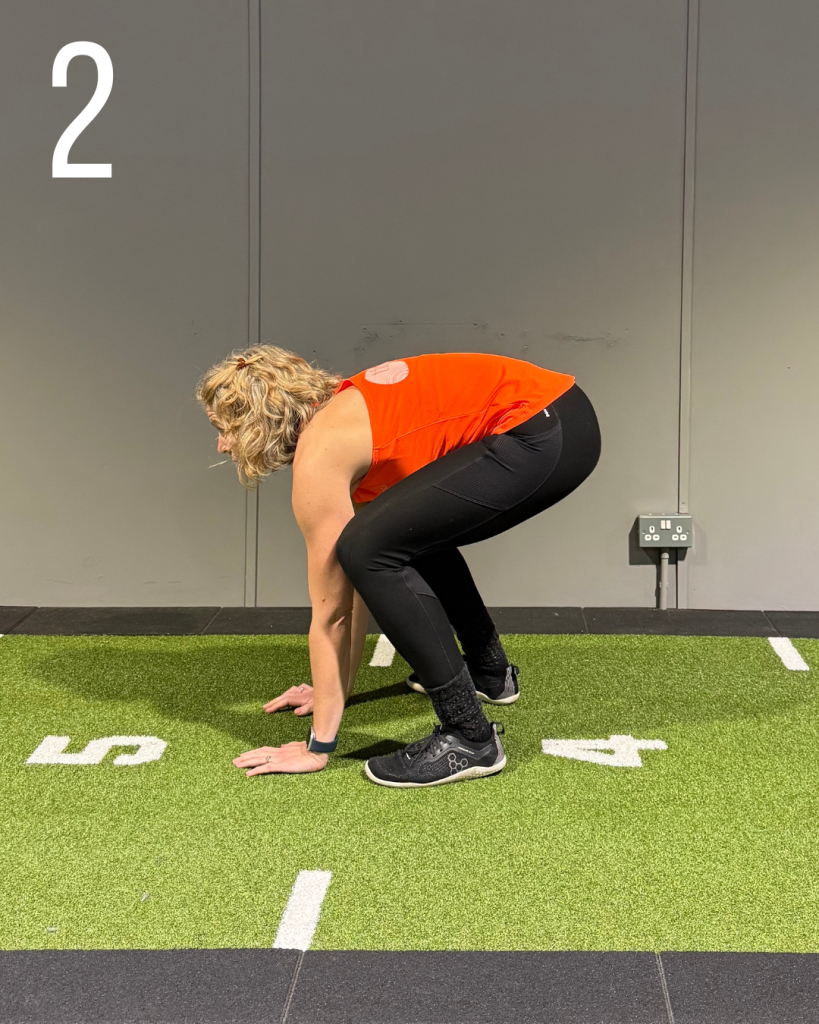
Step 2: Hinge forwards keeping hips high and with a slight bend in your knees, reach hands down to place them on the floor just ahead of you stacking wrists, elbows and knees. Keep your spine long and your eye gaze ahead rather than straight down.
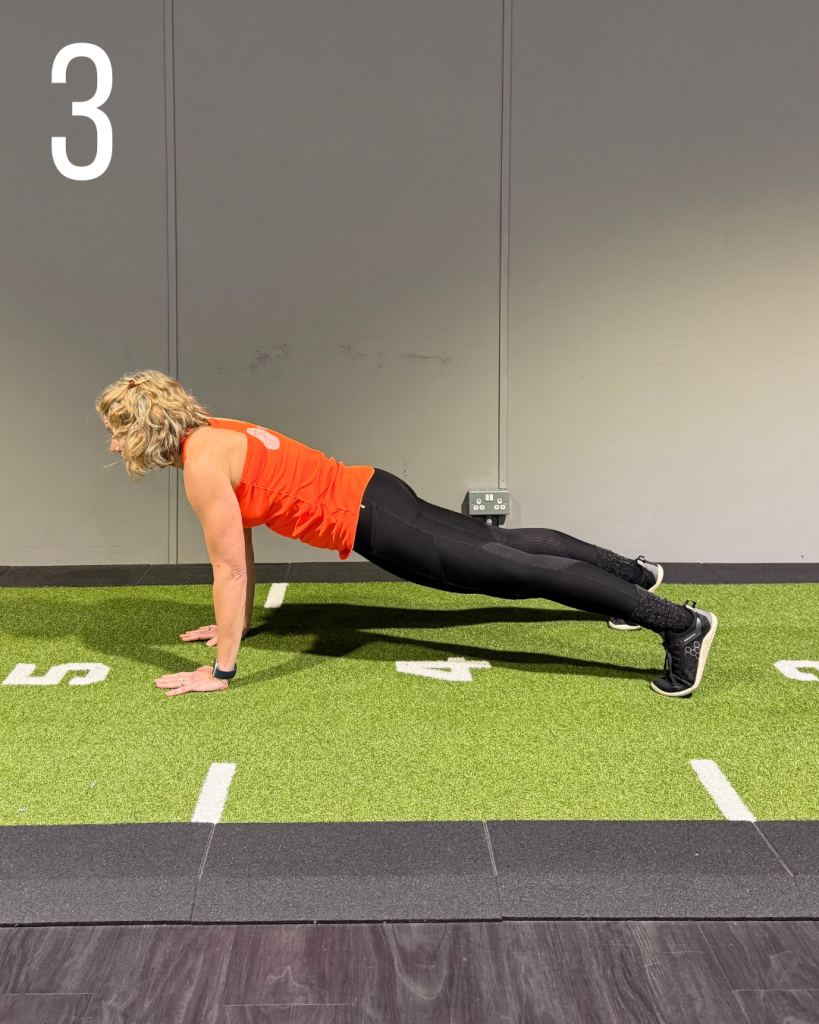
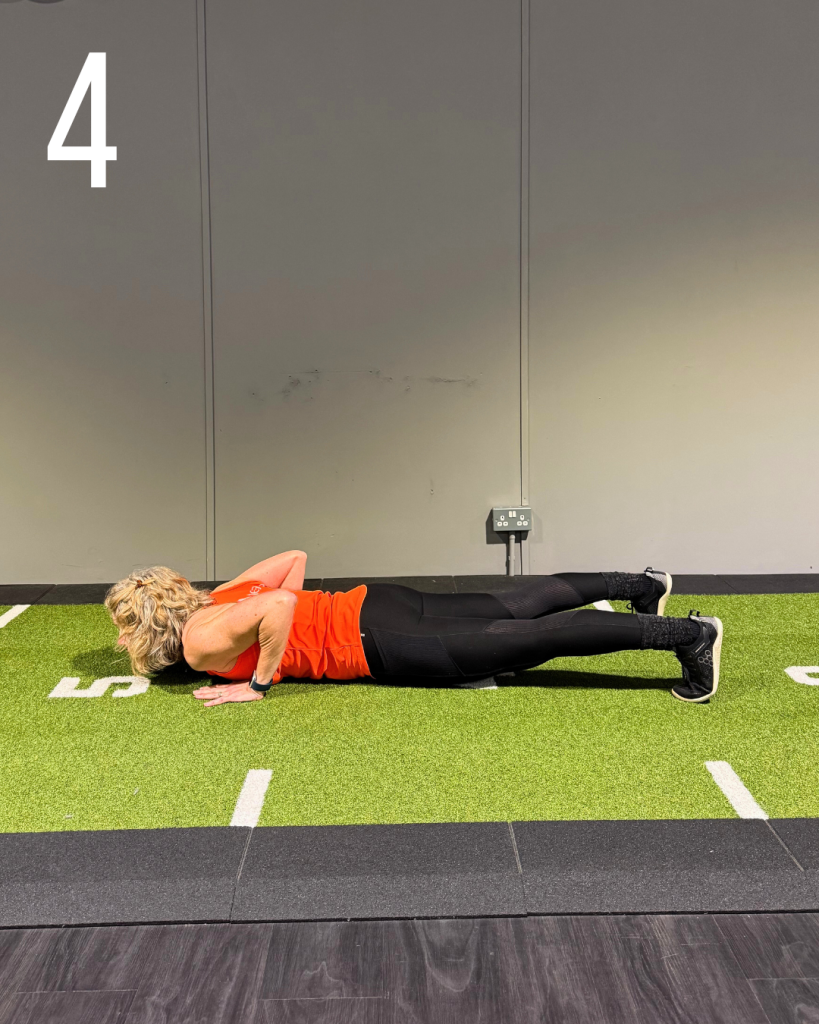
Step 3: Kick legs out to an extended plank position behind you then, by bending your elbows, lower your torso so that your chest and thighs make contact with the floor; keep the inside of your arms tucked in to brush your ribs being careful not to collapse onto the floor.
Step 4: Without too much emphasis through the arms, quickly press the floor away by straightening the elbows and jump both feet or step each foot in turn towards the hands, keeping the hips high.
Step 5: Return to a standing position swinging your arms to give you power to take a vertical two-footed jump, reaching full hip extension, while simultaneously ensuring your hands reach over your ears or higher.
Repeat for the desired number of reps.

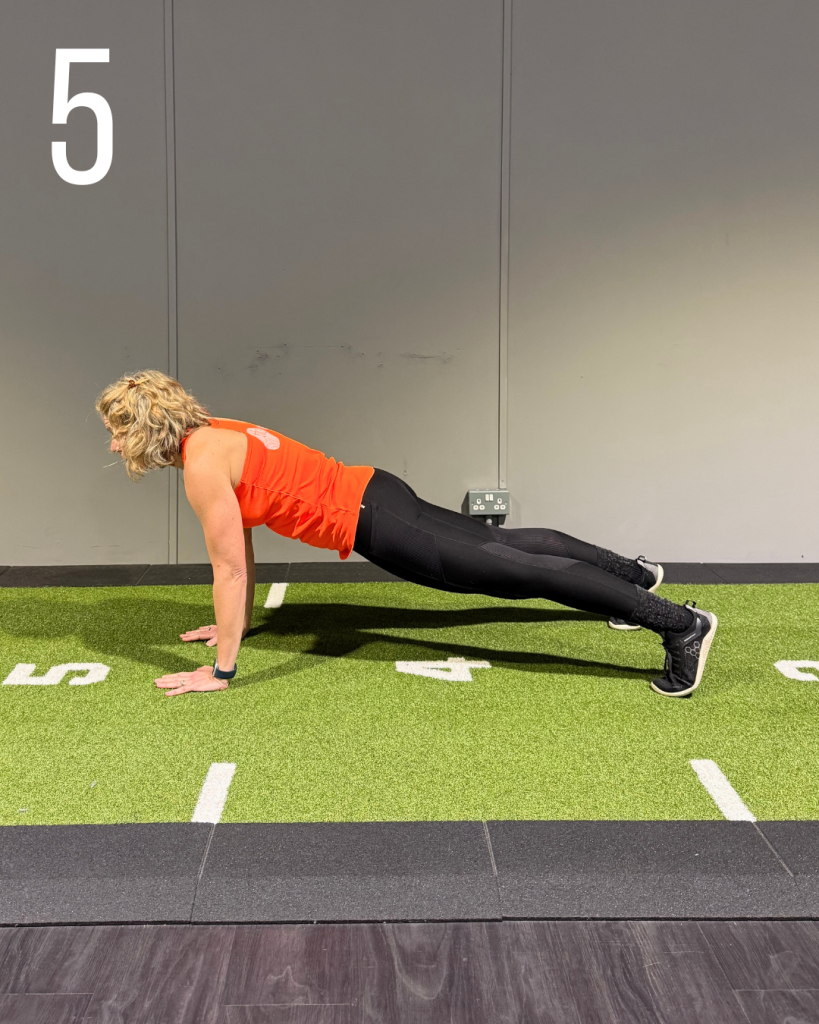
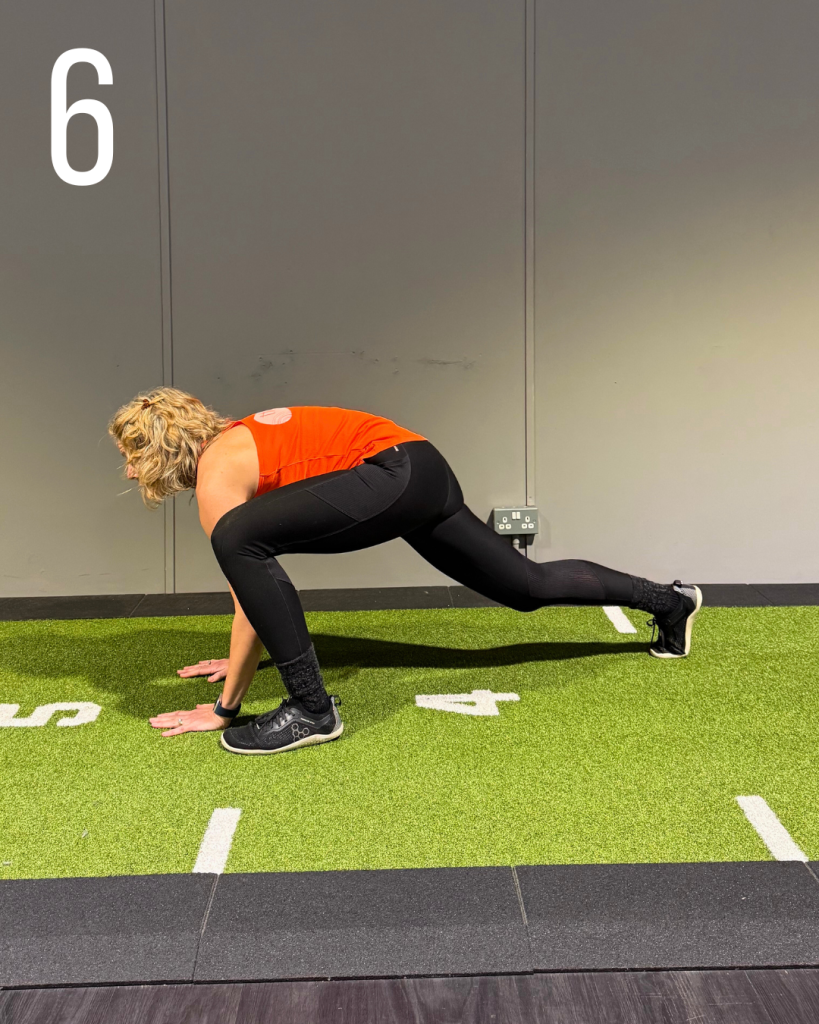

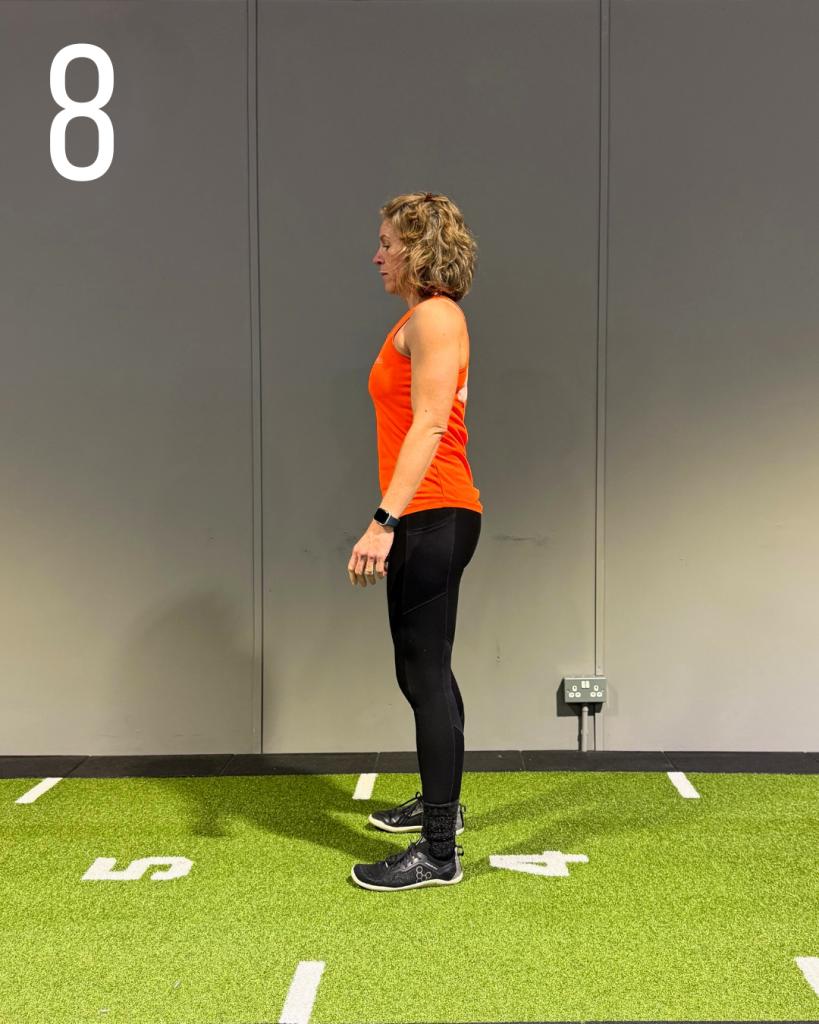
Lower variations:
- Step your feet back towards your hands rather than jumping them.
- Finish your rep when you come back to standing rather than taking the vertical jump.
- Start in a high plank, step your feet towards your hands, stand and reach arms up without jumping. Roll back down through the spine and step feet back out to a plank to take your next rep.
Advanced variations:
- Bosu/plate weight thruster burpee, perform the chest to floor part holding onto your chosen equipment picking it up and thrusting it overhead instead of a vertical jump at the end of a rep;
- Standing knee raise instead of a vertical jump;
- Tuck jump instead of a vertical jump;
- Perform a chest to floor burpee in front of a box replacing the vertical jump with a box jump;
- Mountain climber burpee performing an oblique mountain climber when in the plank stage of the move;
- Devil press burpees holding dumbbells from the plank portion of the move thrusting them overhead when you come to standing.
Form-focused variations, slowing down and focusing on good form can help avoid injury.
- Use a looped band at your knees or thighs can enhance neuro-muscular connection and engagement of your target muscles.
- Try a few reps in front of a mirror or ask someone to video you so you can critique your form, improve your proprioception and correct your position where necessary.
Note: For events such as Hyrox, there are competition-specific rules for technique which must be adhered to in order for all your reps to count!
Blog by Elaine Butler – Personal Trainer